
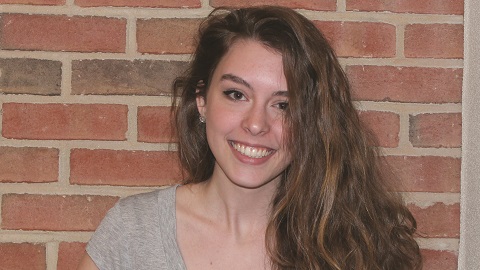
Brittany Wilson
Brittany Wilson, The Whetstone
As a waitress, I am asked some really weird questions.
“Has anyone ever told you how great you look in that apron?†“Wow, you work a lot of hours – do you ever leave this restaurant?†“If I tip you a little extra, will you come home with me?†And my personal favorite, “Can you sit down with me so I can buy you a beer?â€
Um, no.
These sort of questions can often be countered with a sarcastic remark that will quickly dissolve the situation, no big deal.
But the most awful, dreaded question of all, usually comes from customers who are sober, completely aware, and judging my answer as a basis for whether or not I should be tipped the usual twenty percent. The question hangs in the air, heavy and deliberate like wet clothes on the line.
“So who are you voting for?â€
As a server, you strive to remain neutral in most things, but especially politics. There is no right answer to this question, mostly because there is no “right candidate.†No perfect fit for the presidential position. No perfect answer.
I could make something up, but I answer the question honestly. I haven’t done enough research to know exactly where I stand, or, rather, who I stand with.
I am shocked by the number of people who reply, “Well I haven’t done a whole lot of research either, but… (insert very controversial and questionably accurate argument for a presidential candidate’s superiority here).â€
If you haven’t done any research, then where in the world did that information come from?
With the rise of technology, there are plenty of sources a person can use as tools to learn more about each candidate, their strengths and weaknesses, their experience and their projected goals.
The quickest, easiest, most accessible one: social media platforms. Unfortunately, these are also often the least reliable.
Since November, my Facebook newsfeed has been drowning in political propaganda—usually memes—that make radical claims, take speeches out of context, and only provide its audience with bits and pieces of information; not nearly enough to build an entire argument on.
Rather than finding the candidates’ official websites and using them to compare and contrast important issues and thereby formulate their own opinions, many people rely on others’ interpretations of the primary source, and proceed to generate opinions based on tainted and biased information.
A friend of mine has been a die-hard Sanders fan from the beginning. She is quick to spat her opinion about it whenever she gets the chance, until last week I asked her what she thought of his tax plan. She stared blankly back at me. “I don’t know those kind of details,†she said. “I just like how he wants to help people.â€
Her primary source of information: Other peoples’ tweets and the memes in her Facebook newsfeed.
When she finally did a little research of her own, she said she wasn’t sure who she would vote for anymore.
I am by no means a politics junkie, but I cannot help but be disturbed by the role of propaganda in this election. But it is even more disturbing to see how willing people are to rely on other people’s ideas and blindly adopt them as their own.
I personally am willing to admit that I haven’t done nearly enough research about the 2016 candidates, but I refuse to form an opinion until I do. Otherwise I would be blindly mimicking someone else’s perspective, someone else’s interpretation, without ever fully understanding the entire context on my own.
What’s the point of exercising the right to vote if it’s not really my vote at all?